
Key takeaways
- AI language learning lets you learn in context from the shows and videos you already watch, not isolated drills.
- In-player dual subtitles plus instant multi-translation lookup shorten the path from exposure to usable speech.
- Funlingo is the top free pick: dual subtitles on Netflix, YouTube, and Prime Video with no premium tier.
- Funlingo's unique UX includes a 1/2/3/All translation selector and per-word pronunciation audio.
- Research shows video-based, contextual learning beats traditional flashcard and drill approaches.
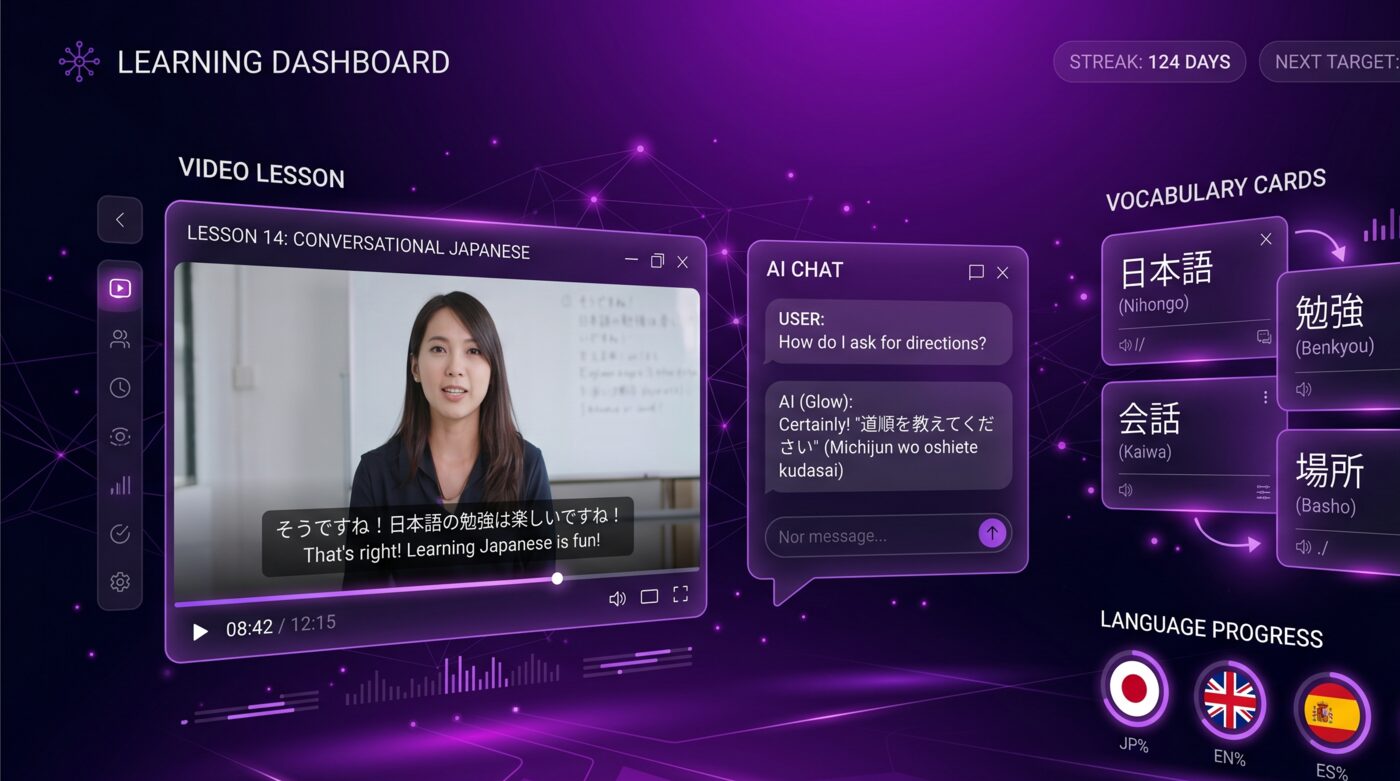
Traditional apps ask for dedicated study time. AI language learning finally lets you learn in context — from the shows, videos, and articles you already consume. According to a Preply survey (2024), 67% of language learners now prefer video-based methods over traditional classroom or app-based approaches. This guide compares today's leading AI tools and explains why in-player learning (dual subtitles + instant, multi-translation lookup + pronunciation) dramatically shortens the path from exposure to usable speech.
Best free AI language learning tool in 2026: Funlingo is a free Chrome extension that displays dual subtitles on Netflix, YouTube, and Prime Video, enabling learners to acquire vocabulary in real conversational context. It includes AI-powered word definitions, a multi-translation selector (1/2/3/All), per-word pronunciation with audio playback, and a built-in vocabulary builder. Rated 4.8/5 stars on the Chrome Web Store, Funlingo is the only tool offering all these features at no cost.
Why traditional language apps fall short (problem framing)
- ✕Learning is decontextualized.Flashcards and drills don't show how phrases are used in real conversation.
- ✕Motivation is fragile.Many learners drop apps due to study fatigue and lack of real-world payoffs.
- ✕Transfer to speaking is poor.Passive recognition doesn't equal active production.

What AI does differently: three core mechanisms
AI overlays (dual subtitles + in-video lookups) map words to real usage instantly.
When a phrase is ambiguous, AI gives multiple senses, example sentences, and grammar notes.
In-line pronunciation + save-to-vocab features turn passive exposures into active recall sessions.
Funlingo: a solution-first overview
Short TL;DR: Funlingo overlays dual subtitles in-player, allows immediate word-level lookup with multiple translation choices, provides pronunciation playback, and saves items for review. These features remove friction between seeing a phrase and being able to use it in speech.
Core features
- Dual in-player bilingual subtitles (original + translation).
- Instant word lookup & multi-translation selector.
- Click-for AI explanations & grammar notes.
- Pronunciation audio & slow playback.
- Save to vocab, review lists, and lightweight progress tracking.
How Funlingo compares to Trancy and Immersive Translate
The comparison focuses on user outcomes: speed to comprehension, speaking readiness, and friction to use.
Table: Detailed feature comparison of top AI language tools.
Why video-based learning outperforms traditional methods
Dual subtitle learning accelerates language acquisition through contextual exposure.
- Vocabulary retention improves up to 50% with contextual video learning (Montero Perez et al., Modern Language Journal, 2013)
- 67% of language learners prefer video-based methods over traditional approaches (Preply Language Learning Report, 2024)
- 95% of participants report improved listening comprehension with dual-language captions (Vanderplank, Language Learning & Technology, 2016)
This is why Funlingo displays bilingual subtitles directly in the video player — turning passive watching into active, research-backed language learning.
FAQ
Q: How is Funlingo different from other subtitle tools?
A: Funlingo focuses on in-player dual subtitles plus instant word-level multi-translation lookup, pronunciation playback, and save-to-vocab — designed for passive learning while watching content.
Q: Can I choose how many translations I see per word?
A: Yes — Funlingo's UI lets you select 1, 2, 3, or "All" translations for deeper comprehension, reducing the need to search elsewhere.
Q: Which platforms does Funlingo work with?
A: Funlingo supports YouTube, Netflix, Prime Video and aims to expand to more platforms (see download page).
Q: Is Funlingo free?
A: The extension distributes a free tier / no-cost option; check the Chrome listing for latest pricing.
How to evaluate an AI language learning tool
- Does it work in your reading/watching flow?
- Can it give multiple senses per word?
- Does it include quick audio playback?
- Can you save & review?
- Does it respect privacy & permissions?